
You’re putting in the work. You show up for your Personal Training sessions, you commit to your Yoga flow, and you’re eating supportive fuel. So why, after weeks of effort, does it feel like your lifts have stalled?
The answer lies in a fundamental principle of strength training: Progressive Overload.
Progressive overload simply means continually increasing the demands placed on your muscles to force them to adapt and grow. If you keep doing the same thing, your body stops seeing a reason to change. At TrainHer by Ivane, we build your personalised plan around this principle to ensure you’re always challenging your body and achieving consistent, measurable results.
Forget hitting plateaus—here are the 3 core pillars we use to keep you getting stronger.
Pillar 1: The Intensity Pillar (Weight)
This is the most well-known method of progressive overload. If you want to get stronger, you eventually have to lift heavier.
The Method: Increase the weight you lift. If you performed 8 squats with 30kg last week, try to perform 8 squats with 32.5kg this week.
The Caution: Increasing weight should only happen when you can execute the prescribed number of reps with perfect form. Sacrificing form just to lift heavier is the fastest path to injury and undermines your Core Stability.
“Only increase the weight when your last one or two repetitions of a set feel comfortably challenging (but not impossible). If your form is breaking down, use the next pillar instead!”TrainHer Tip
Pillar 2: The Volume Pillar (Reps & Sets)
Volume relates to the total work done. If you can’t lift heavier yet, you can increase volume by doing more repetitions or adding an extra set.
The Method:
Increase Reps: If you are programmed to do 3 sets of 8 squats, try to do 3 sets of 9 (same weight).
Increase Sets: If you are programmed for 3 sets of 10, try adding a fourth set (4 sets of 10).
Why It Works: Increasing the total time your muscle is under tension forces it to build endurance and stamina. Once you can easily complete the higher volume, you know you’ve adapted and are ready to increase the weight (Pillar 1).
Example: You perform 3 sets of 10 push-ups perfectly. Next week, you aim for 4 sets of 10 push-ups. Once that is easy, you progress to a more challenging variation (Pillar 3).
Pillar 3: The Efficiency Pillar (Density & Difficulty)
This pillar focuses on making the same work harder or doing more work in less time. This is key for boosting endurance and breaking through strength plateaus.
- Increased Density – Reduce Rest Time: If you rest 90 seconds between sets, try reducing it to 60 seconds. This increases the total work done in the same amount of time.
- Increased Time Under Tension – Slow Down the Negative: Spend 3-4 seconds lowering the weight during a squat or bench press. This greatly increases the challenge at the same weight.
- Increased Difficulty – Change the Exercise: Progress from a Dumbbell Goblet Squat (easier) to a Barbell Back Squat (harder), or from a Plank to a Plank with a single arm/leg raise.
TrainHer Note: We use the Efficiency Pillar often in TrainHer programming to keep your body guessing, improve endurance, and build functional strength without always having to hit a new maximum weight.
How to Apply Progressive Overload to Your Week
Don’t try to apply all three pillars at once! A great training program (like those offered by TrainHer by Ivane) will manipulate these variables strategically.
Week 1-3: Focus primarily on Pillar 2 (Volume)—get comfortable with the movement and hit your prescribed reps/sets.
Week 4-6: Introduce Pillar 1 (Intensity)—when you hit your prescribed reps easily, add weight.
Week 7-9: Introduce Pillar 3 (Efficiency)—cut rest or slow down the tempo to break through adaptation barriers.
The Golden Rule: Always prioritize Form before attempting any form of overload. That stable base built from a strong core and engaged glutes is your insurance policy against injury.
Ready to stop guessing and start seeing real, measurable gains? Let’s build your personalised plan around the proven science of Progressive Overload!
Related Posts

Beyond the Ab Crunch: The 5 Best Core Exercises for a Strong and Stable Back
Ditch crunches! 5 functional core moves for a truly stable back.
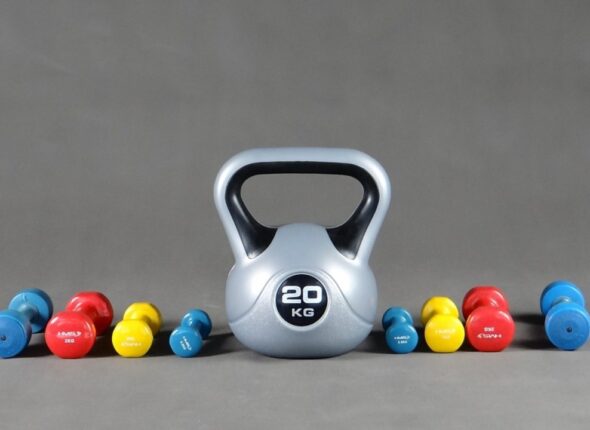
Dumbbells Only: A Killer 30-Minute Full Body Workout You Can Do Anywhere
A killer 30-minute full body circuit you can do anywhere with dumbbells.
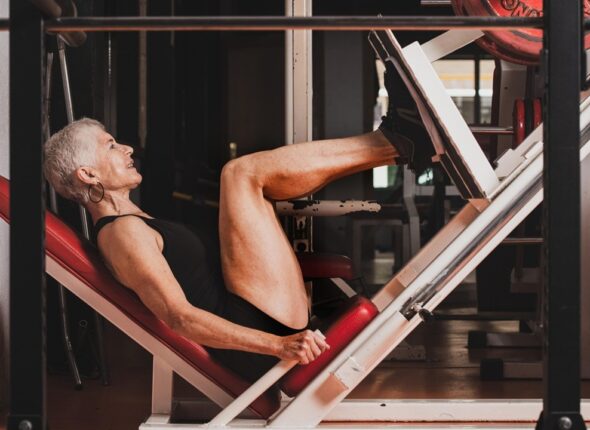
Why the Glutes Matter: The Base of Core Strength and Good Posture
Your glutes are the base for posture. Learn to activate them for a stable back.